

Key Takeaways
- Dining in senior living is about connection, joy, and daily rhythm, not just nutrition.
- Personalized menus reflect individual preferences, cultural backgrounds, and personal wellness plans.
- Shared meals help reduce isolation and spark real friendships.
- A warm, welcoming dining atmosphere supports both emotional and physical well-being.
- Knowing what questions to ask on a tour can help you spot a dining program built around people, not routine.
Food Is About So Much More Than Eating
Think about the meals that have meant the most to you. Chances are, it wasn’t about the food alone. It was the laughter at the table, the smell of something familiar simmering on the stove, the feeling of belonging somewhere warm and good. That’s exactly what dining at Juniper Village at Chatham can and should feel like every single day.
A thoughtful dining program in independent living or assisted living does more than fill a plate—it nourishes your whole self, from the inside out. It anchors your day, feeds your social life, and gives you something genuinely worth looking forward to. When dining is done right, it’s one of the quiet heartbeats of a thriving community.
Personalized Nutrition for Every Person at the Table
Food That Fits Your Life
No two people have the same tastes, routines, or needs, and a great dining program knows that. In assisted living, menus can be tailored to your lifestyle and what makes you feel your best. Whether you’re managing a specific dietary need or simply love a good bowl of soup, the food on your plate can reflect who you are.
At Juniper Village at Chatham, it’s easy to make dining choices that fit your wellbeing goals. Our restaurant-style menus feature icons that indicate whether a dish is heart-friendly, vegetarian, high in sugar, or gluten free. In addition, our team pays attention to what you enjoy and what you’d rather skip to make personalized recommendations.
Variety, Choice, and Seasonal Flavors
Rotating, seasonal menus keep things exciting all year long. In spring, that might mean fresh asparagus and bright citrus, or roasted squash and warm apple crisps in fall. The flavors change with the calendar, so there’s always something new to look forward to. Senior living dining menus can play a meaningful role in how residents feel and connect day to day.
Cultural backgrounds and personal traditions matter here, too. Whether you grew up with Sunday roasts, rice and beans, or a particular holiday dish that still tastes like home, a dining program built around the palate of the community honors those stories. Food is identity, and it deserves to be treated that way.
The Social Side of the Dining Room
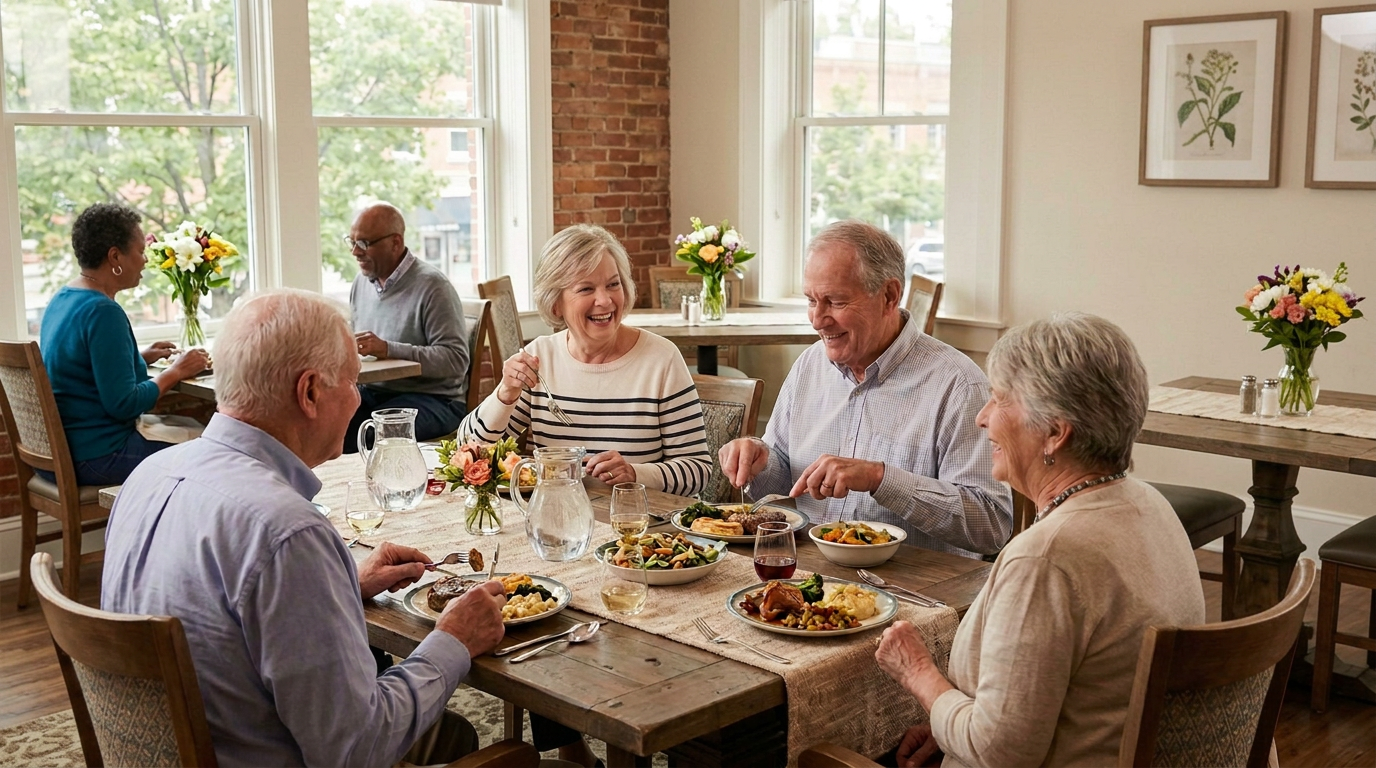
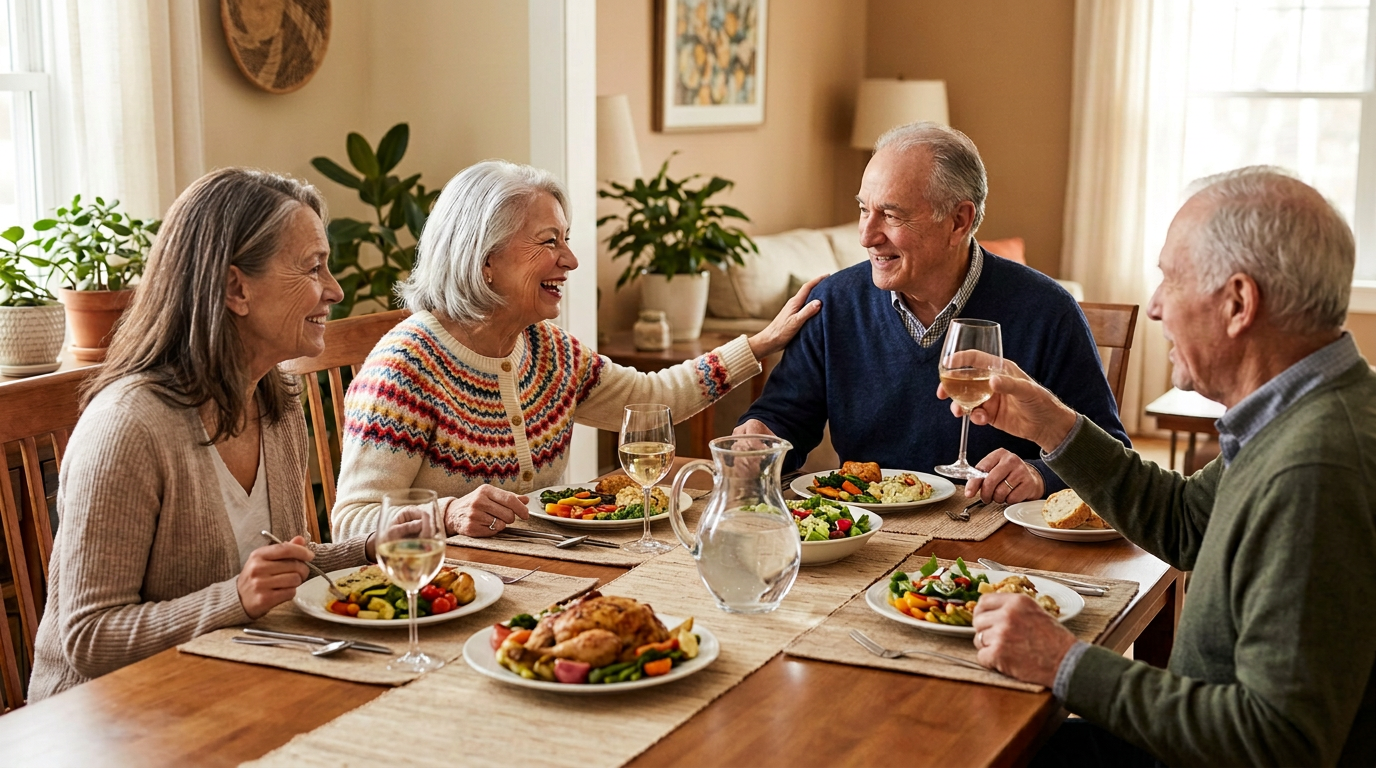
Something happens when people share a table. Conversations start over bread baskets. Friendships grow over dessert. A dining room in a senior living community can become one of the most vibrant social spaces in the building if it’s designed with that in mind.
Themed dinners, seasonal celebrations, and special culinary events turn an ordinary Tuesday into something memorable. Maybe it’s a Mediterranean night with candlelight and olives, or a birthday dinner where the whole table sings. These moments aren’t extras—they’re the texture of a life well lived.
Shared meals also gently push back against isolation, which can affect many older adults in independent living or assisted living. A standing lunch date with a neighbor or a familiar face at your usual table can be the social anchor that makes a whole day feel connected and full.
How Dining Supports Physical and Emotional Well-Being
Nourishment That Feels Good
Balanced, flavorful meals can support your energy, lift your mood, and help you stay active and engaged throughout the day. When you’re eating well and actually enjoying what’s on your plate, it shows—in how you feel and how you move through your day. Eating a variety of nutrient-rich foods can make a real difference in how vibrant and energized you feel.
Attentive staff notice shifts in appetite without making it clinical. If you’re eating less than usual or something doesn’t sit right, the team responds with warmth and curiosity, not a clipboard. That kind of care feels like family, not a form.
The Comfort of a Warm, Welcoming Space
Picture the clink of glasses, the aroma of something just pulled from the oven, the low hum of conversation filling a sunlit room. The dining space itself plays a real role in how a meal feels. Soft lighting, comfortable seating, and a relaxed pace can turn lunch into a genuine pleasure rather than a task to check off.
When the atmosphere feels like a favorite neighborhood restaurant rather than a scheduled stop, residents linger. They talk. They laugh. That ease is everything.
What to Look for in a Senior Living Dining Program
When you’re touring a senior living community, the dining room is one of the best places to get a real feel for the culture. Ask if you can share a meal. Notice how the staff interact with residents. Look for menus that change with the seasons and reflect real variety.
Ask questions like: Can menus be adjusted for personal preferences? Are cultural or traditional dishes ever on the menu? What does a typical dining experience look like day to day? The answers reveal a lot about whether a community puts residents first. Explore Juniper’s dining experience to see what a people-first approach actually looks like on the plate.
At Juniper Village at Chatham, dining is woven into a larger vision of personalized senior living, one where every detail, right down to what’s on your fork, reflects who you are and how you want to live your third act. Come see the table for yourself.